Blogs

Designing Luxury Boxes in Singapore: Tips, Materials & Printing Techniques

Thu, 2026-03-26

Luxury boxes in Singapore find a ton of use in the business world.

They can be used to elevate a product’s presentation, notably jewellery, tech, and high-end goods. They can be used to create PR kits—those the company sends to journalists and bloggers to professionally and presentably convey information.

They can be used as tokens and gestures to VIPs who come into the office, such as a huge potential client. They can be used as onboarding packages for newly-hired employees.

Car dealerships, banks, and insurance companies can provide these packages to those who’ve signed a deal.

As such, it’s imperative that companies invest time and effort in these luxury boxes, as they offer a wide range of benefits, both client-facing and internal.

This guide will walk you through some crucial tips and information you should know when looking for luxury boxes in Singapore

Key Takeaways

  • Luxury boxes serve a wide range of business functions in Singapore, from elevating high-end product presentations to creating professional PR kits and VIP onboarding packages.
  • Effective box design must maintain brand consistency to reinforce the company's identity through the packaging appearance and the unboxing experience.
  • Leveraging the tactile feel of a package through its weight, texture, and structural integrity communicates a brand's commitment to quality and innovation.
  • Utilising advanced printing techniques and sophisticated finishes—such as 3D embossing, foil stamping, or soft-touch lamination—adds a wow factor that makes a brand unforgettable.

Tips for Designing Luxury Boxes in Singapore

There are three things to keep in mind when looking for a custom media kit in Singapore (or any type of luxury box).

Tip 1: Keep Consistent With The Brand

This goes without saying.

Even before the recipient opens the box, the package must convey and exude the company’s brand identity. This reinforces the brand’s identity and values, and curates an experience for the recipient.

The unboxing is the first physical interaction people have with your brand. If that experience feels no different from opening a shoe box in the attic, then you’ve missed an opportunity to connect people with the brand.

The box should contain the following elements:

  • Brand colours
  • Brand imagery
  • Press Letter / Welcome Note written in the desired brand tone.

When you’re engaging a custom luxury box maker in Singapore, they’ll likely also provide services that can elevate your press letter or welcome note. You’d want to avail of this service as well for an optimal brand experience for your recipients.

Tip 2: Leverage Tactile Feel

A luxury box in Singapore with texture, providing a tactile feel to recipients.

Unboxing is a detailed and nuanced experience. Unlike digital media, such as email newsletters and social media, PR boxes can be felt, held closer to the face, and every detail (or lack thereof) can be appreciated.

While the eyes see the brand, the hands feel the quality. The box’s texture, weight, and durability attribute values, such as uncompromising quality and innovation to the contents inside and, more importantly, to the brand that’s sending the message.

Notice that when you open the boxes of Apple products, the boxes themselves have some heft, rigidity, and smoothness. Even before you hold the iPhone in your hands, the tactile feel of the box already exudes the same premium innovation and minimalism that Apple stands for.

Tip 3: Use Premium Printing Techniques to Elevate Colour

You’d want colour that pops and doesn’t fade. This is especially important if you’ll be storing your boxes.

When boxes reach their intended recipient, they should have the same colour and vibrance as when they were freshly printed, despite having been stored for a while.

Premium printing often utilises PMS (Pantone Matching System) Spot Colors. If your brand colour is a specific "Electric Cobalt," CMYK might make it look slightly purple or dull. A PMS Spot Colour is a pre-mixed ink that ensures every box in a 5,000-unit run is identical.

Materials for Designing Luxury Boxes

The material of a luxury box makes up its structure, rigidity, and feel. However, your choice of material will also determine the cost of the boxes.

We recommend the following materials for your luxury boxes:

Rigid Boxes

If you’ve opened any product from Apple, Samsung, or Google’s Pixel lineup, you’ll know what these are and how they feel.

Rigid boxes are sturdy, compact, and have some weight to them. Unlike standard box materials, they aren’t flimsy.

Because of their dense walls, they offer a signature heft and structural integrity. They don't bend or crush easily, providing a psychological sense of high value and protection for the treasures inside.

Also, rigid boxes are engineered so the lid slides off slowly, creating a pressurised hiss that gives off a more premium unboxing experience.

Common cardboard boxes arrive flat and need to be folded. Rigid boxes, on the other hand, are manufactured in their final three-dimensional form and stay that way. They are the gold standard for high-end electronics, jewellery, and influencer PR kits.

It’s important to note that because of the materials and construction of rigid boxes, this option is the most expensive one you’ll see on this list.

Paperboard

Example of paperboard material used for luxury boxes in Singapore containing jewellery products

Commonly known in the industry as Folding Cartons, paperboard is the versatile, lightweight champion of the retail shelf. If you’ve ever opened a box of tea or a tube of toothpaste, you’ve handled paperboard.

It is made from a single layer of pressurised paper pulp. Despite its standard thickness and rigidity, paperboard is highly printable. It captures fine text, vibrant gradients, and complex metallic foils better than almost any other material.

Because of this, it can convey brand colours and make finer text more legible. It’s also not as costly as rigid boxes.

Corrugated Cardboard

Corrugated Cardboard is a multi-layered engineered material designed for maximum strength and protection. If you’ve ever received an Amazon delivery or a heavy subscription box, you’ve handled corrugated.

It consists of three distinct layers: an inside liner, an outside liner, and a wavy, fluted middle layer. This arched fluting creates a series of air columns that act as a shock absorber, providing a high strength-to-weight ratio that resists crushing, making it exceptional for shipping.

Printing on corrugated cardboard can be a bit of a challenge, however. If you print directly onto a thick corrugated board with too much pressure, the liner sinks into the gaps between the flutes, creating visible horizontal stripes in your artwork.

Though custom box companies have ways to work around this, ensuring corrugated cardboard boxes are as presentable as possible.

Printing Techniques

Printing transfers your design onto the box material, dressing it up in your vibrant branding. However, different printing techniques result in different outcomes.

The following are the most commonly used methods for custom media kits in Singapore.

Letterpress Printing

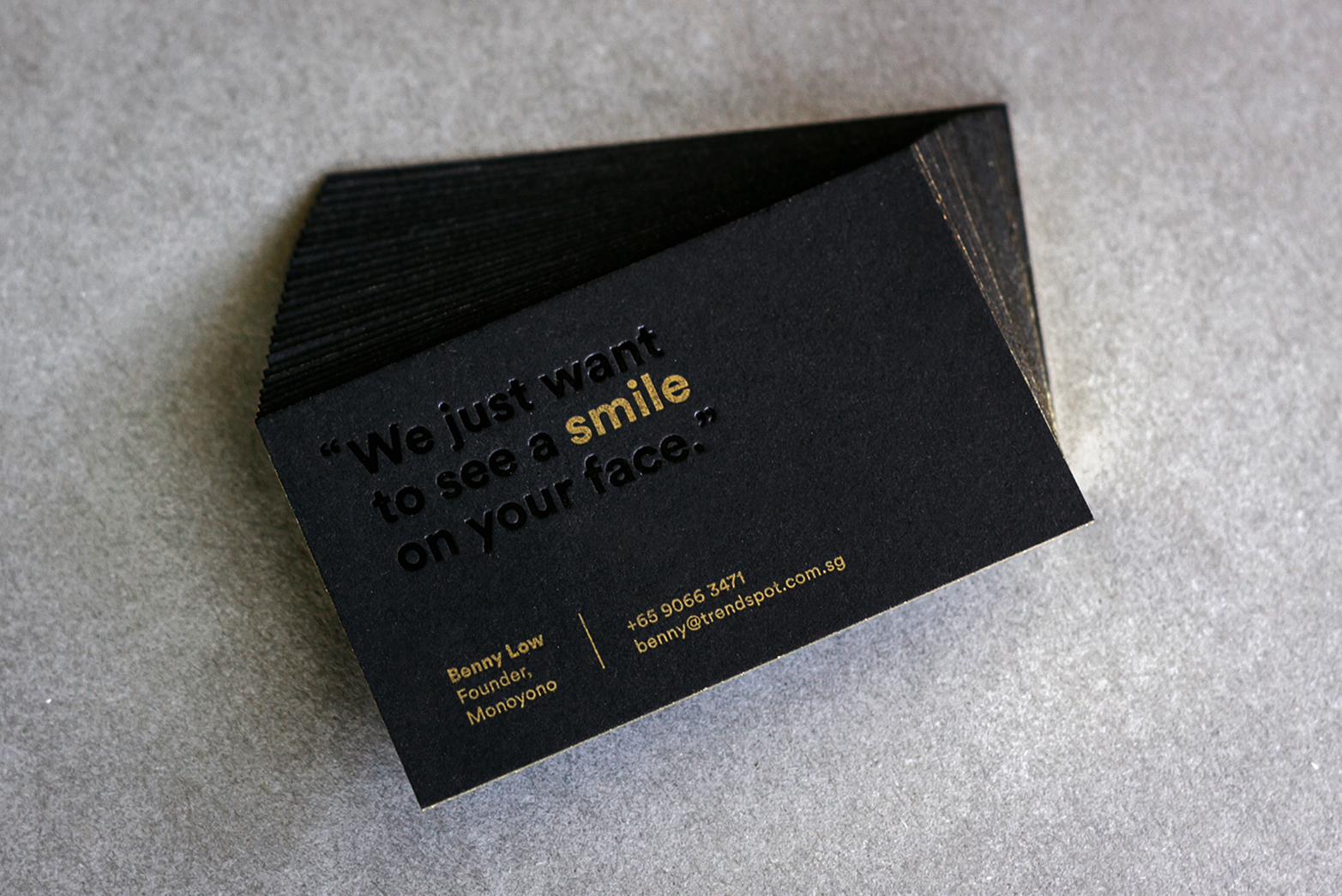
A business card in Singapore that had undergone Letterpress printing

Letterpress is the oldest traditional printing technique, now reborn as a premium choice for high-end packaging and PR kit correspondence.

A custom-made metal or polymer plate is inked and then pressed into the surface of the material. Hence the name, “letterpress.”

Unlike digital or offset printing, which lays ink flat on the surface, letterpress creates a distinct tactile deboss. When you run your fingers over the design, you can feel the indentations where the plate has clamped into the material. This adds depth to your luxury box, especially around the letters of the design.

Letterpress uses solid, pre-mixed inks. It isn't designed for photographs or complex gradients. Rather, it excels at minimalist designs and bold typography,

Thermography Printing

A close-up of a marriage invitation showing thermography printing, which can elevate luxury boxes in Singapore

Thermography is a multi-step process that uses heat to create a raised, dimensional texture on a printed surface.

Also known as “Raised Ink” printing, it provides a high-end, tactile look without the expensive cost of custom metal dies. It is a favourite for brands that want their logos to literally stand out from the page.

While the ink is still wet on the paper (usually from a standard offset press), a special plastic resin powder is dusted over the sheet. The powder sticks only to the wet ink. The sheet is then passed through a high-heat oven, where the powder melts, swells, and hardens into a smooth, raised, glossy finish.

It achieves a similar look to engraving or embossing but is much more affordable for medium-sized runs because it doesn't require carving a physical die.

Tip: Because of thermography’s glossiness, it creates a striking visual contrast when applied to a matte or uncoated paper stock.

Digital Print

This type of printing is the method most offices and households are familiar with. If you’ve ever printed an image onto paper using a commercial printer, you know what digital print is.

Unlike traditional methods that require physical plates or stamps, digital printing transfers an image directly from a computer file to the box material using advanced inkjet or laser technology.

It applies tiny droplets of ink with extreme precision, resulting in an incredibly sharp image.

Luxury Finishes

Finishes add some flair, texture, and character to a luxury box. The following are some handy finishes that companies can use for their boxes.

Soft Touch Laminate

Soft-touch laminate is a premium plastic film applied to the surface of a box to transform its texture and appearance.

It replaces the cold, slick feel of standard plastic with a texture often described as velvety, peach fuzz, or supple suede. It creates an immediate association with premium quality the moment the recipient pulls the box out of its shipping mailer.

It provides an ultra-matte finish with zero glare or reflection. This makes it a favourite for PR kits because it looks incredible under studio lights. Also, soft-touch films are engineered to resist the oily smudges and fingerprints, making the box appear stellar even after being passed around and handled.

However, if you’re looking for a glossy finish for your box, soft-touch laminate isn’t for you.

Spot UV

A gilded card with Spot UV finish - An ideal finish for luxury boxes in Singapore

Spot UV is a liquid polymer coating applied to specific areas of a box and cured with ultraviolet light.

Unlike a general gloss finish that covers the entire box, this is applied only to a spot—such as a logo or some text on the box. This leaves the rest of the box with its original texture (usually a matte or soft-touch finish).

It creates a high-shine appearance that contrasts with the rest of the box. When the recipient tilts the box, the light catches the Spot UV areas, making them pop off the background. This makes them excellent for Reels and B-roll.

Foil Stamping

Lion King collectibles package made with gold foil stamping - An ideal finish for luxury boxes in Singapore

Foil stamping is a premium finishing technique that uses heat, pressure, and a metallic film to brand a design onto the surface of a box. Foil stamping provides a true, mirror-like reflectivity to the box design.

A metal die (usually made of brass or copper) is heated and pressed against a thin layer of foil and the box material. The heat melts an adhesive on the back of the foil, permanently bonding the design into the fibres of the paper.

While gold and silver are the classics, here at PYPR, foils are available in copper, rose gold, shocking pink, matte white, and holographic, among many other unique colours.

Also, because of the pressure involved, the design is often slightly debossed (sunk into the material), giving it a physical depth that feels substantial and premium under the fingers.

3D Embossing

3D embossing sample - An ideal finish for luxury boxes in Singapore

3D embossing is an advanced finishing technique that raises the surface of a box to create a multi-dimensional, sculptural effect.

Unlike flat embossing, which raises a design to a single uniform height, 3D embossing uses custom-curved dies to create varying levels of depth, rounded edges, and intricate detail.

A set of custom-etched metal dies (a male and female plate) acts as a mould. The box material is sandwiched between these plates under extreme pressure, permanently reshaping the paper fibres into a 3D form.

You get a design with peaks, valleys, and shadows. When light hits the box, it creates natural highlights that make the artwork look as if it’s carved from the packaging itself.

Get Luxury Boxes in Singapore Today!

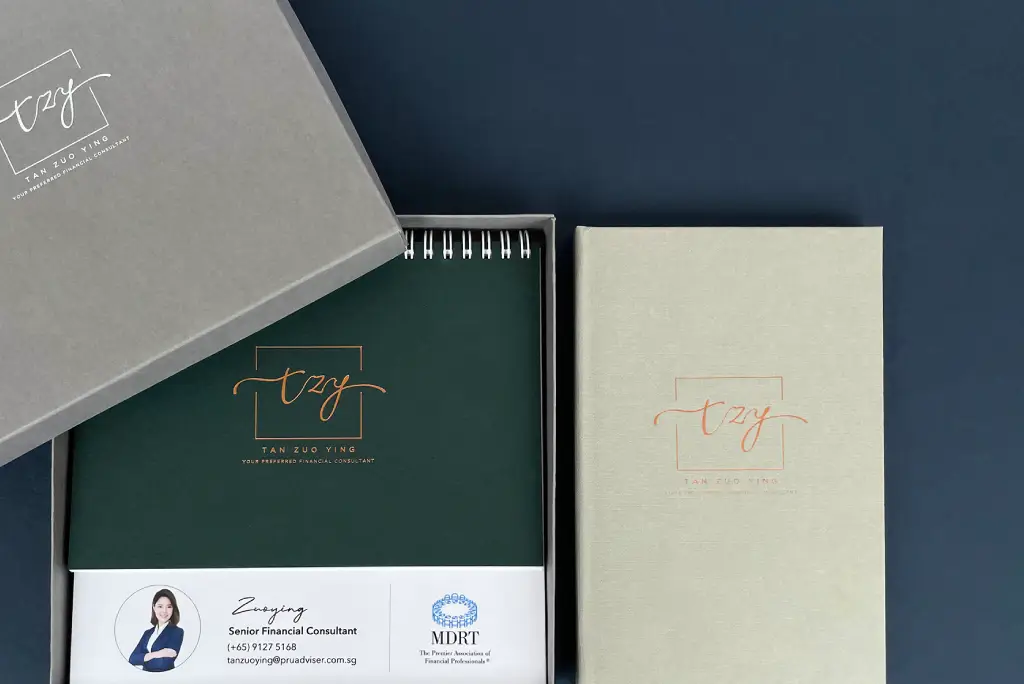
An example of a luxury box in Singapore

The packaging—whether it’s product packaging or a custom PR kit—elevates the brand experience you deliver to stakeholders. The details of the box matter, especially since it’s one of your more tactile marketing opportunities. 

From the satisfying hiss of a vacuum-seal lid to the velvet touch of a soft-touch laminate, every element we’ve discussed contributes to making your brand unforgettable.

At PYPR, we specialise in turning luxury box concepts into physical realities. We don't just print boxes; we engineer experiences that resonate with your audience. With our extensive range of specialty foils, and precision embossing,

your brand will not only be seen—it will be felt.

Get in touch with PYPR today! Consult with our experts to discuss the best materials and techniques for your project. We also make custom prototypes so you can see and feel your vision before moving to full production.

Frequently Asked Questions

What is the typical turnaround time for custom luxury box production in Singapore?

While timelines vary by design complexity, a standard production run generally takes 24 to 38 weeks after approval of the final prototype.

Can PYPR assist with the internal structural design, such as custom foam or card inserts

Yes, luxury box manufacturers typically offer custom-designed inserts to ensure your products—whether jewellery or tech—are held securely and presented beautifully within the box.

How do I choose between a matte or glossy finish if my brand uses very bright colours?

A matte finish, like soft-touch laminate, is often preferred for vibrant colours to prevent light glare from washing out the hues, especially when the box will be photographed or filmed.

Can I combine multiple printing techniques, such as Embossing on top of a foil-stamped area?

Absolutely; combining textures—often called multi-level finishing—is a common way to create a highly sophisticated, multi-sensory brand experience.

Do I need to provide my own technical die-lines, or does PYPR provide templates?

PYPR can provide standard templates for common box sizes, or our design team can create custom structural die lines tailored to the dimensions of your product.