

Table of Content
- Key Takeaways
- Importance of a Business Card to Your Business
- Creative Business Card Ideas to Reflect Your Brand Identity
- How to Convey Your Brand Identity Through the Business Card
- Get in Touch with a Custom Business Card Provider Today
- Frequently Asked Questions
In an era dominated by digital QR codes and LinkedIn connections, the physical business card remains one of the most powerful networking tools in a professional’s arsenal.
It is more than just a piece of paper with a phone number; it is a physical extension of a brand’s personality. When you hand someone a card, you provide a physical memento that lasts long after the conversation ends. Though it may later be shoved into a drawer somewhere, the impression a pretty, on-brand business card creates lasts.
Choosing the right materials and design elements is essential to ensuring a strong first impression.
Key Takeaways
- A physical business card serves as a powerful networking tool, a tangible extension of your brand’s personality.
- Choosing high-quality materials and design elements is essential for establishing professional legitimacy and building immediate trust with prospects.
- Specialised materials and finishes enable companies to communicate diverse values, from sustainability and craftsmanship to high-end luxury.
- Unique textures and bold designs help a card act as a mental bookmark for recipients, making your services much easier to recall.
- Ensuring consistency between your card’s visual elements and your broader brand identity creates a unified professional experience.
Importance of a Business Card to Your Business
A business card serves as a visual shorthand for your company’s contact details.
- A well-crafted card conveys legitimacy and preparation; it shows that you have invested in your professional image, which builds immediate trust.
- It’s also stored in a prospective client or partner’s wallet until such time they think about you and pull that card out to give you a call.
- They’re also elements that reinforce brand identity, cultivating a stronger brand that will resonate with prospects.
- They can be placed in a custom media kit in Singapore, along with other notes, letters, and correspondence.
They also eliminate the friction of digital exchange. There is no need to worry about dead batteries, poor signal, or typos when simply handing over a card.
Creative Business Card Ideas to Reflect Your Brand Identity
.jpg)
The business card has evolved. Today, there are dozens of specialized materials and finishes that can help a brand communicate its values: whether those are sustainability, luxury, or cutting-edge innovation.
In a stack of traditional white cards, a unique texture or a bold design acts as a bookmark in the recipient's mind, making it much more likely that they will recall your services when the need arises.
They function like brand-centered packaging or luxury boxes in Singapore—they provide a memorable touchpoint, even if through a simple exchange of business cards.
300gsm / 350gsm Cardstock
This is the industry standard for professional business cards. 14pt is a sturdy choice, while 16pt offers a slightly heavier, more premium feel.
These options are versatile and provide a solid foundation for most professional service providers who want a reliable, traditional card.
You can’t go wrong with the standard; the unique element arises when you apply your printed design.
Matte Business Cards
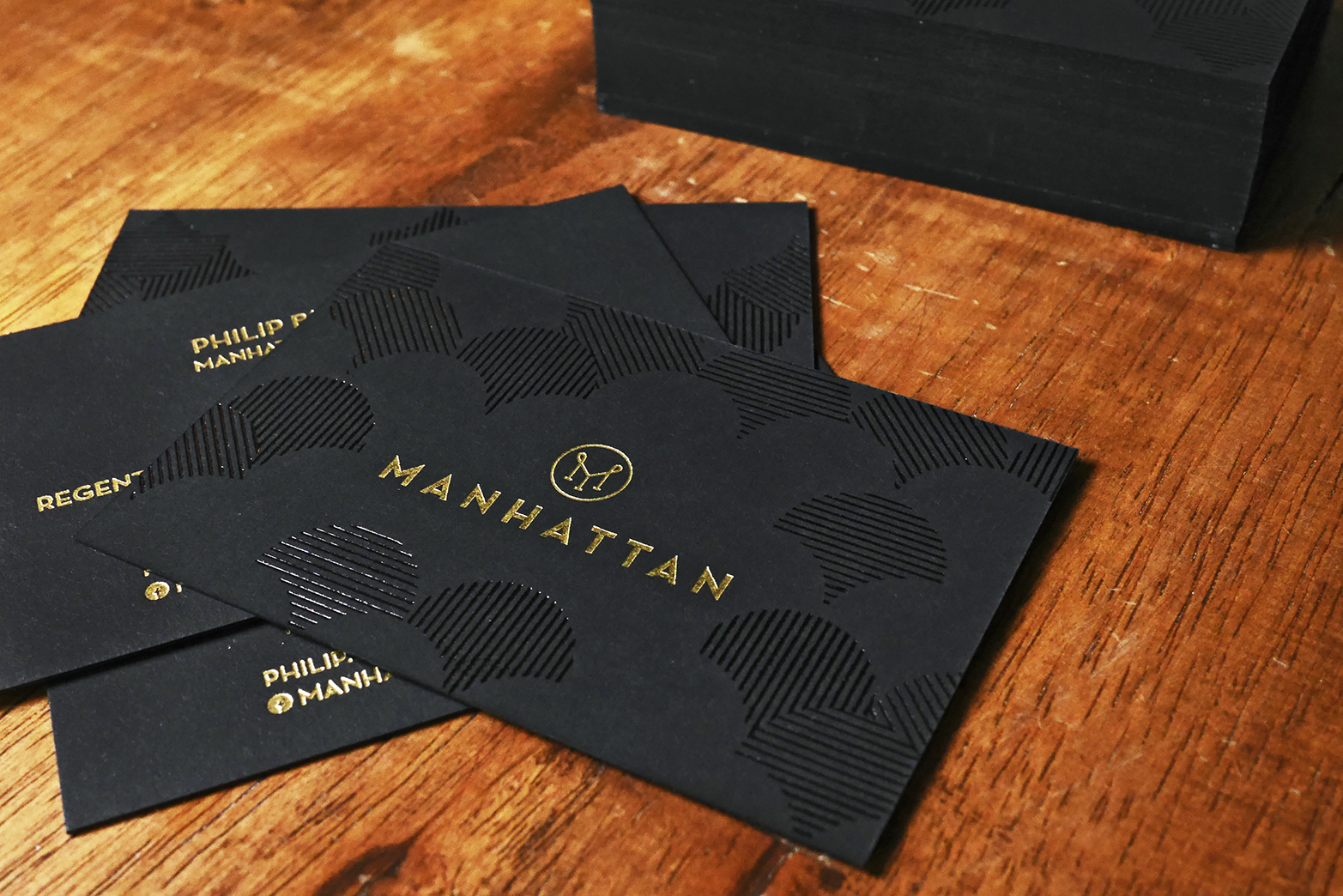
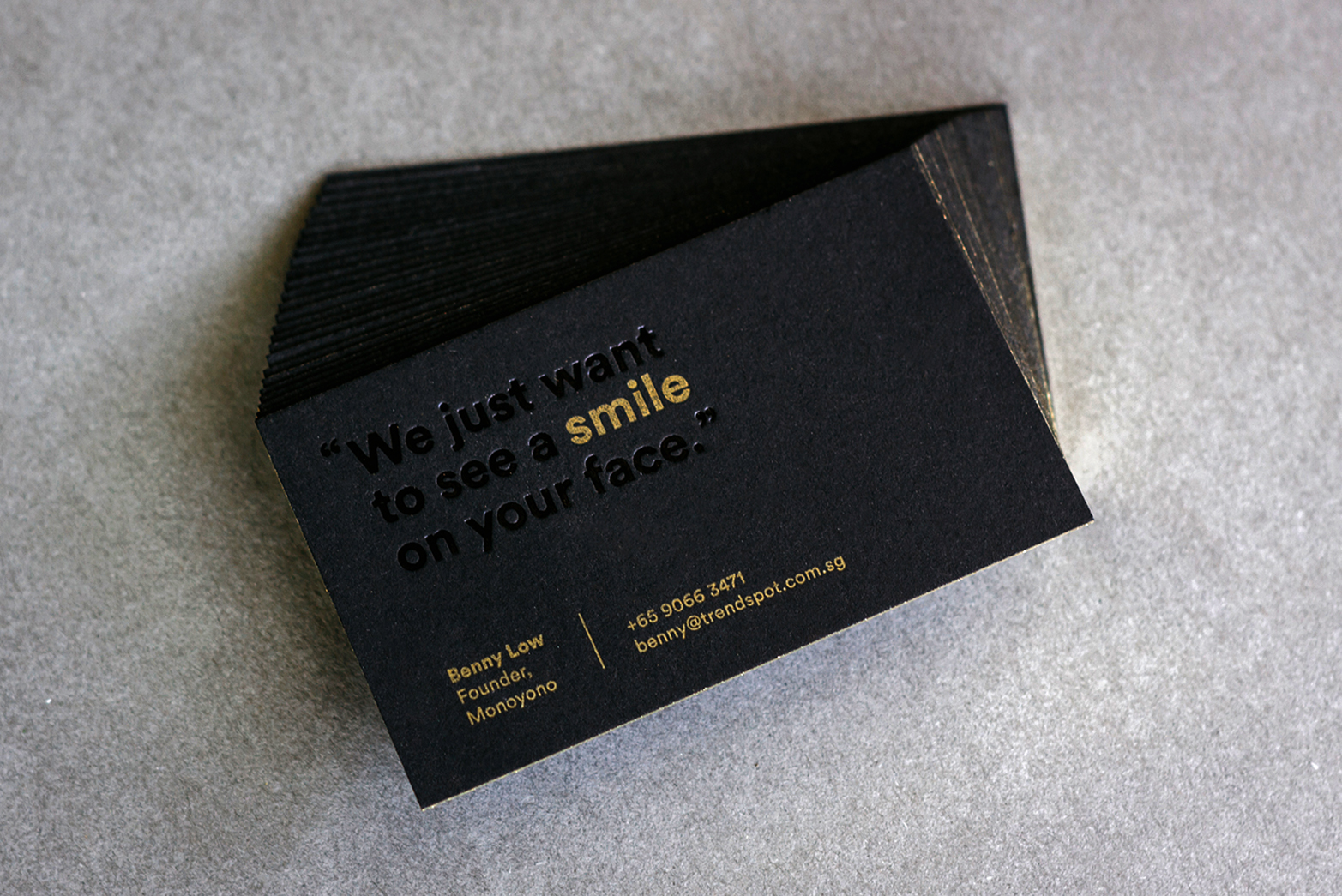
Matte cards offer a smooth, non-reflective finish that exudes sophistication and understated luxury.
Because they lack glare, they appear polished and quite upmarket. This finish is a favorite for corporate firms and high-end consultants who want a clean, professional look.
Linen Business Cards
Linen paper features a subtle crosshatch texture that mimics the feel of fine fabric.
It is a tactile paper that brings out a classic, and elegant feel. This is the choice material for traditional name calling cards and is also suitable for professional business cards.
It is commonly used by resorts, tourist destinations, restaurants, and luxury boutiques to convey a sense of heritage.
Cotton Business Cards
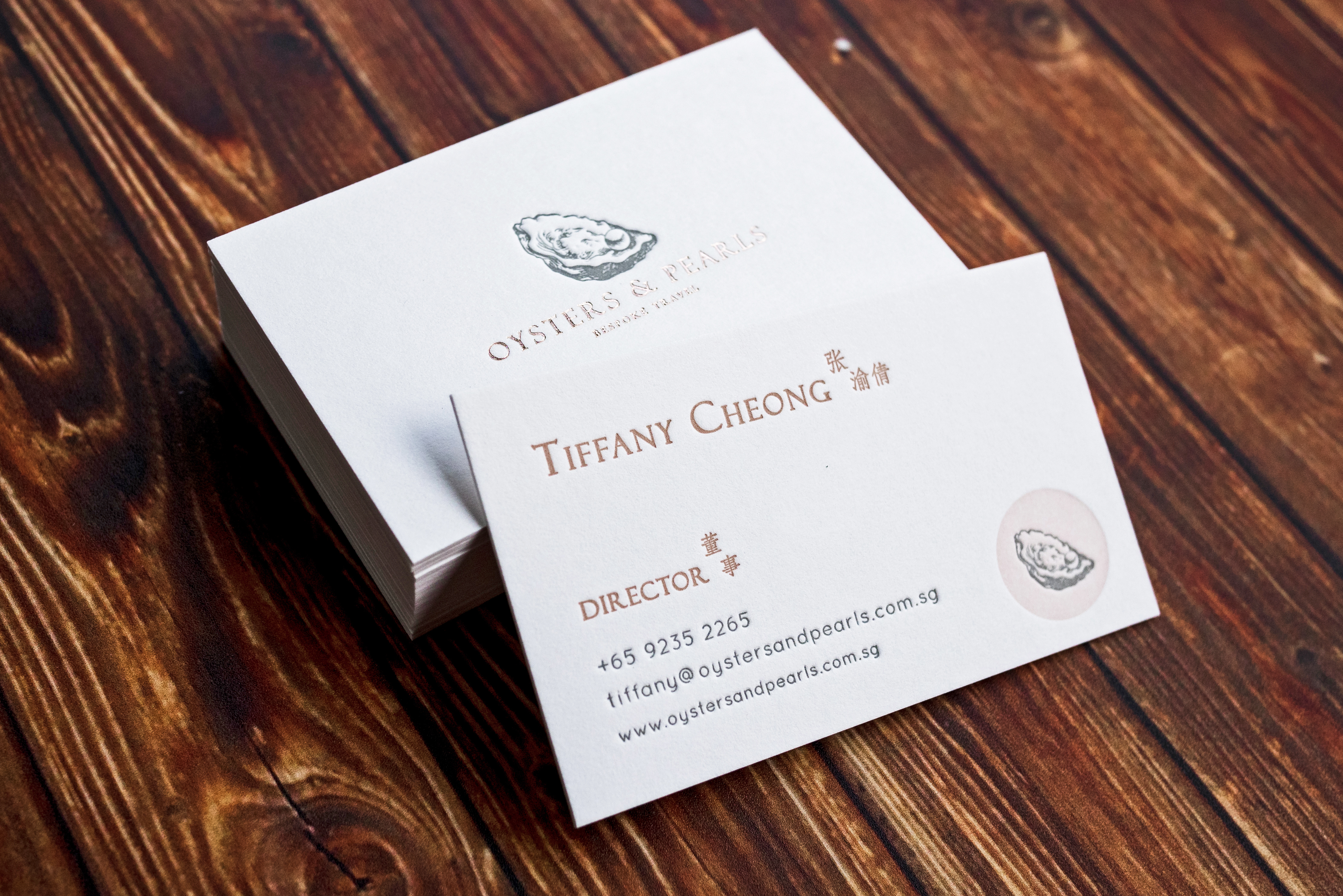
Made from 100% cotton fibers, these cards are exceptionally soft to the touch yet surprisingly durable.
Cotton paper is often thicker than standard cardstock, making it the premier choice for high-end branding. It has a natural, bright white finish that feels organic and premium.
They also render ink beautifully, so if you wish to sign on a business card, your signature won’t smudge or fade.
Suede/Soft-Touch Business Cards
Often described as feeling like velvet, suede, or soft-touch, these cards use a specialized laminate to create the buttery feel you’ll notice while holding them.
They exude the same poshness as carpeted floors. This makes them perfect for luxury goods, creative agencies, and lifestyle brands.
Beyond the premium feel, this finish makes the card water- and tear-resistant, ensuring it remains in pristine condition even after months in a recipient’s wallet.
Kraft Business Cards
For brands that prioritize a rustic, handmade, or organic vibe, Kraft paper is the go-to material.
Its light brown, fibrous appearance immediately signals eco-conscious or artisanal values. It’s ideal for businesses that want to highlight handmade works, craftsmanship, and startup humility.
It works beautifully with black-ink and gold foil designs.
Hemp/Bamboo Business Cards
These cards are crafted from rapidly renewable hemp fibers, which are naturally durable and resistant to yellowing.
They typically feature a slightly off-white, organic tone and a subtle, textured fleck that gives the card a raw feel.
It is an ideal choice for eco-conscious startups, wellness brands, or any business looking to signal a commitment to environmental innovation.
Embossed Business Cards
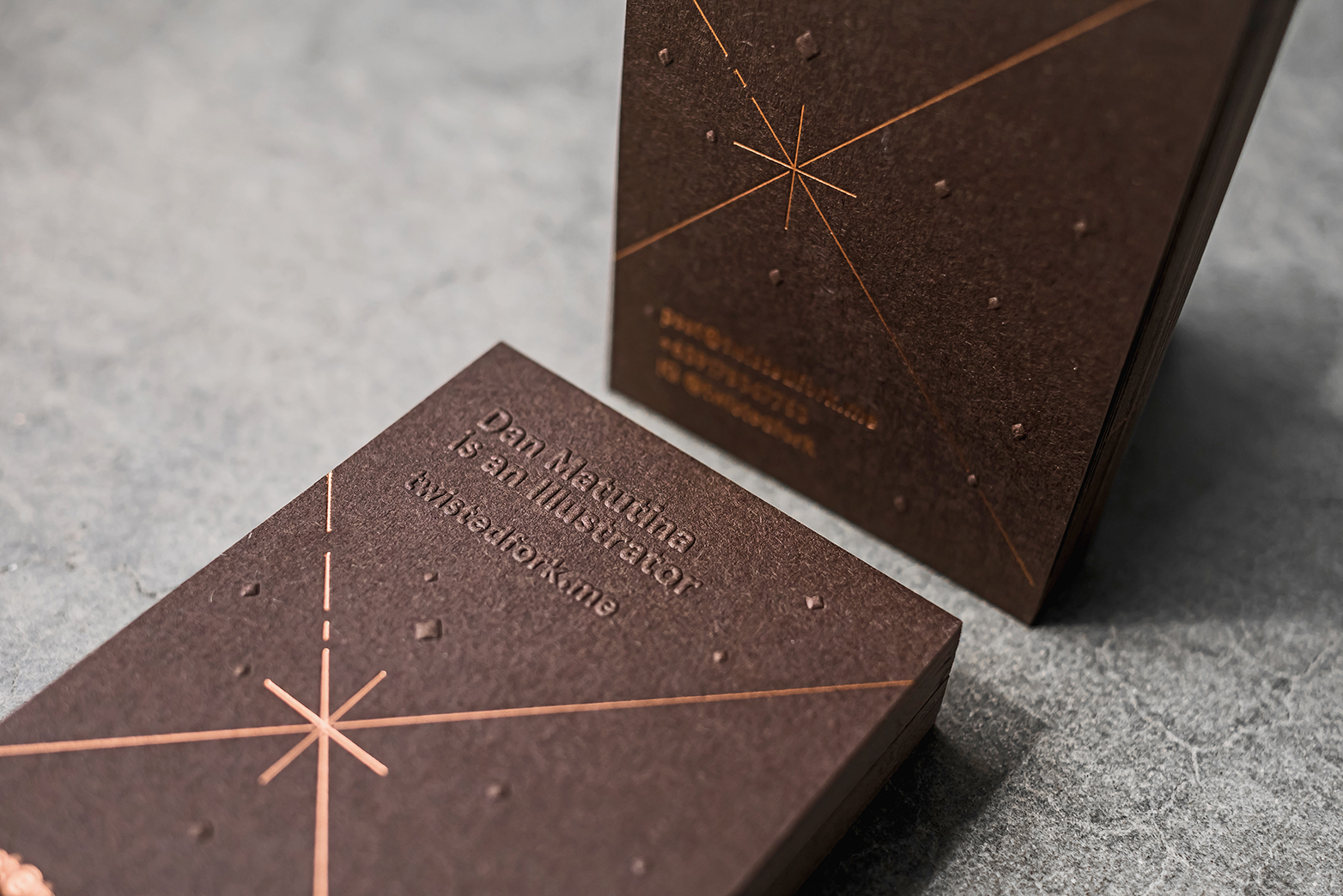
Embossing involves pressing the paper in between 2 engraved plates to create a raised 3D effect, typically used for a logo or name.
This adds a physical dimension to the card, encouraging the recipient to run their fingers over its surface.
Embossed cards maximise the physical, tactile medium of the business card, ensuring that it doesn’t just visually serve its purpose, but also exudes character through crests and fissures.
Debossed Business Cards
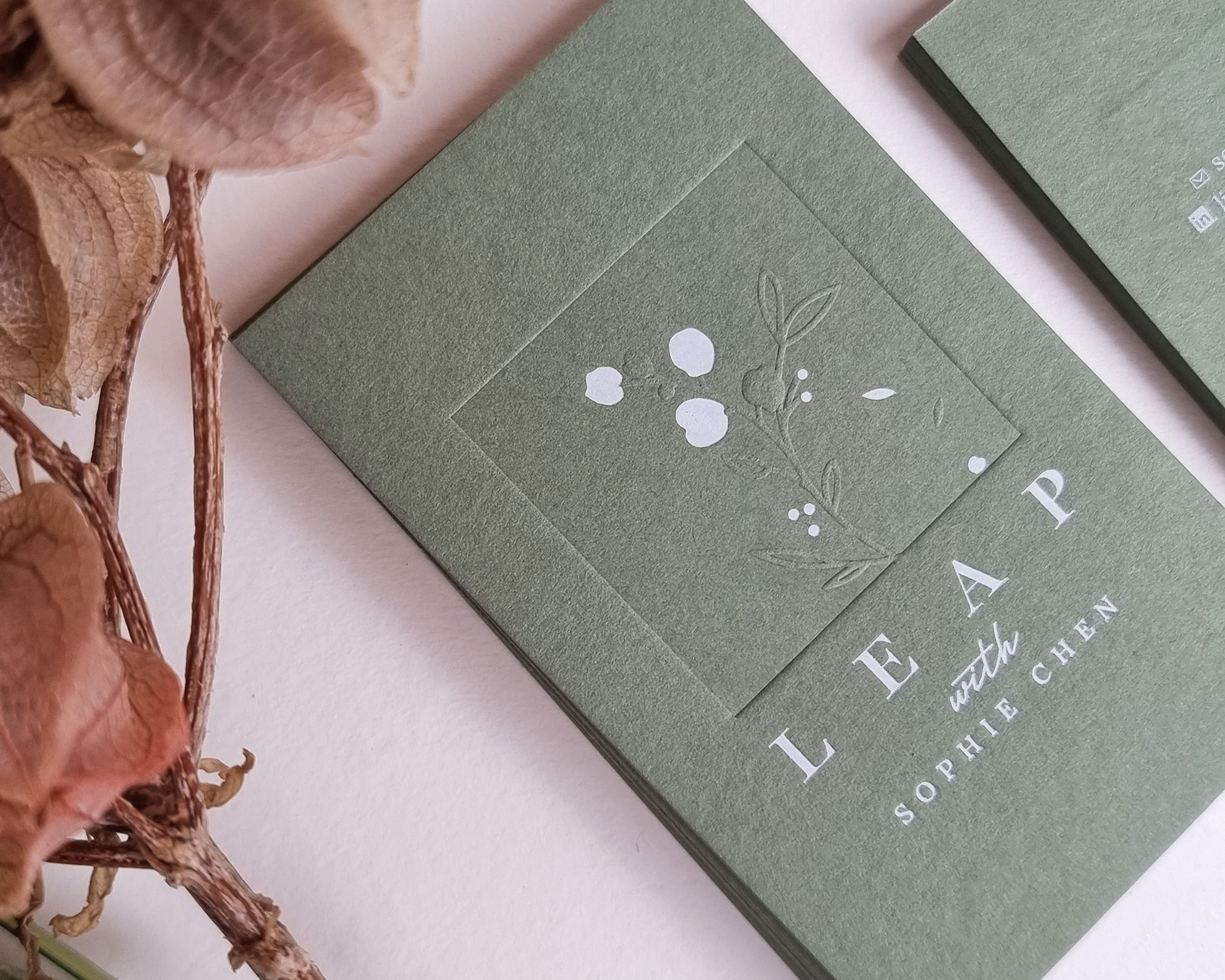
The opposite of embossing, debossing presses the design down into the paper.
This creates a stamped or letterpress look that adds depth to the card. It works best on thicker materials, such as cotton or high-weight cardstock.
Thermography-Printed Business Cards
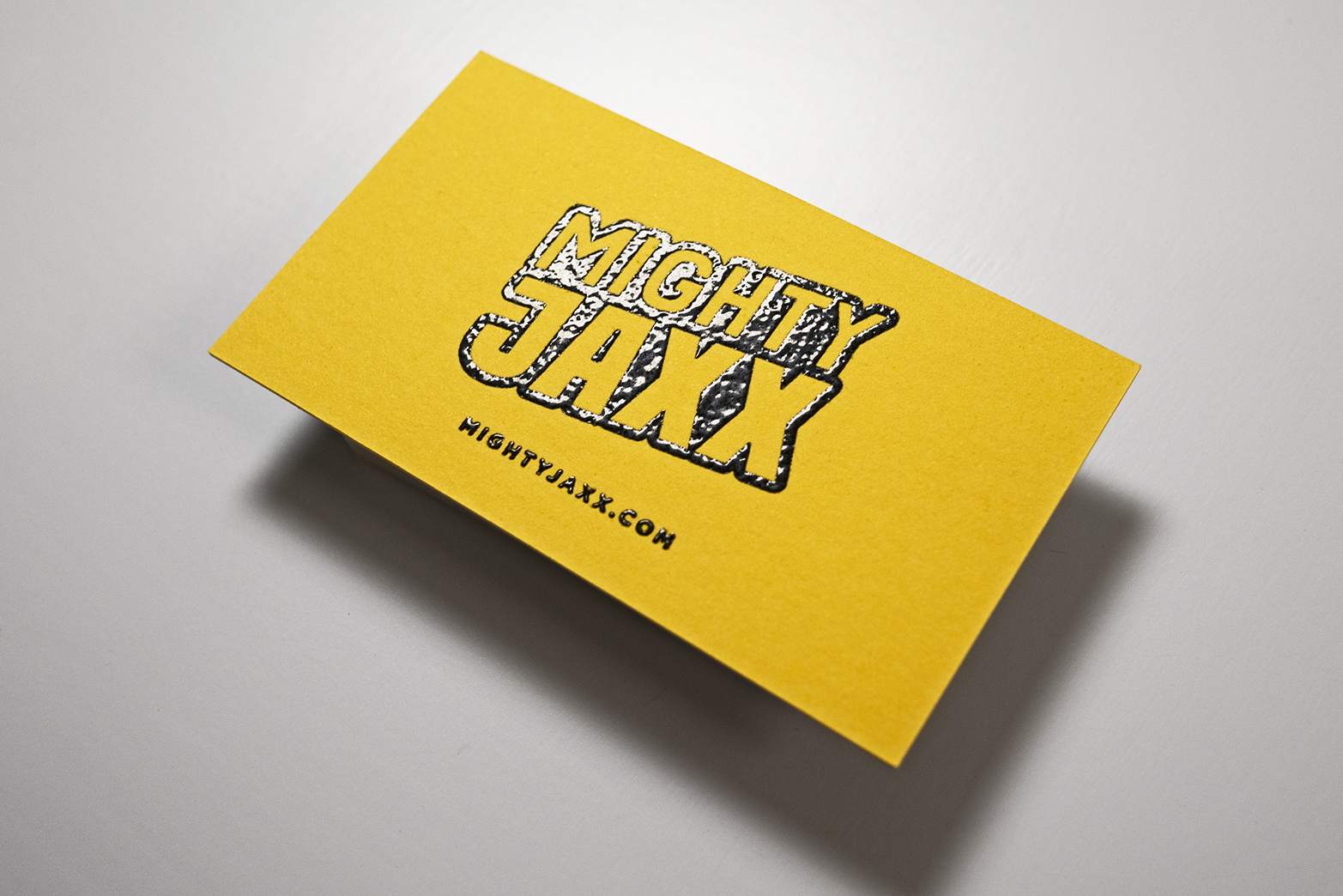
Thermography uses a special powder and heat process to create raised, shiny ink. It provides a similar effect to embossing, but with a distinct, glossy texture on the lettering itself.
When this glossy, embossed ink is used on matte paper, for example, it provides the business card with an elegant contrast that highlights the logo, brand name, and other imagery on the card.
Gilded Edge Business Cards
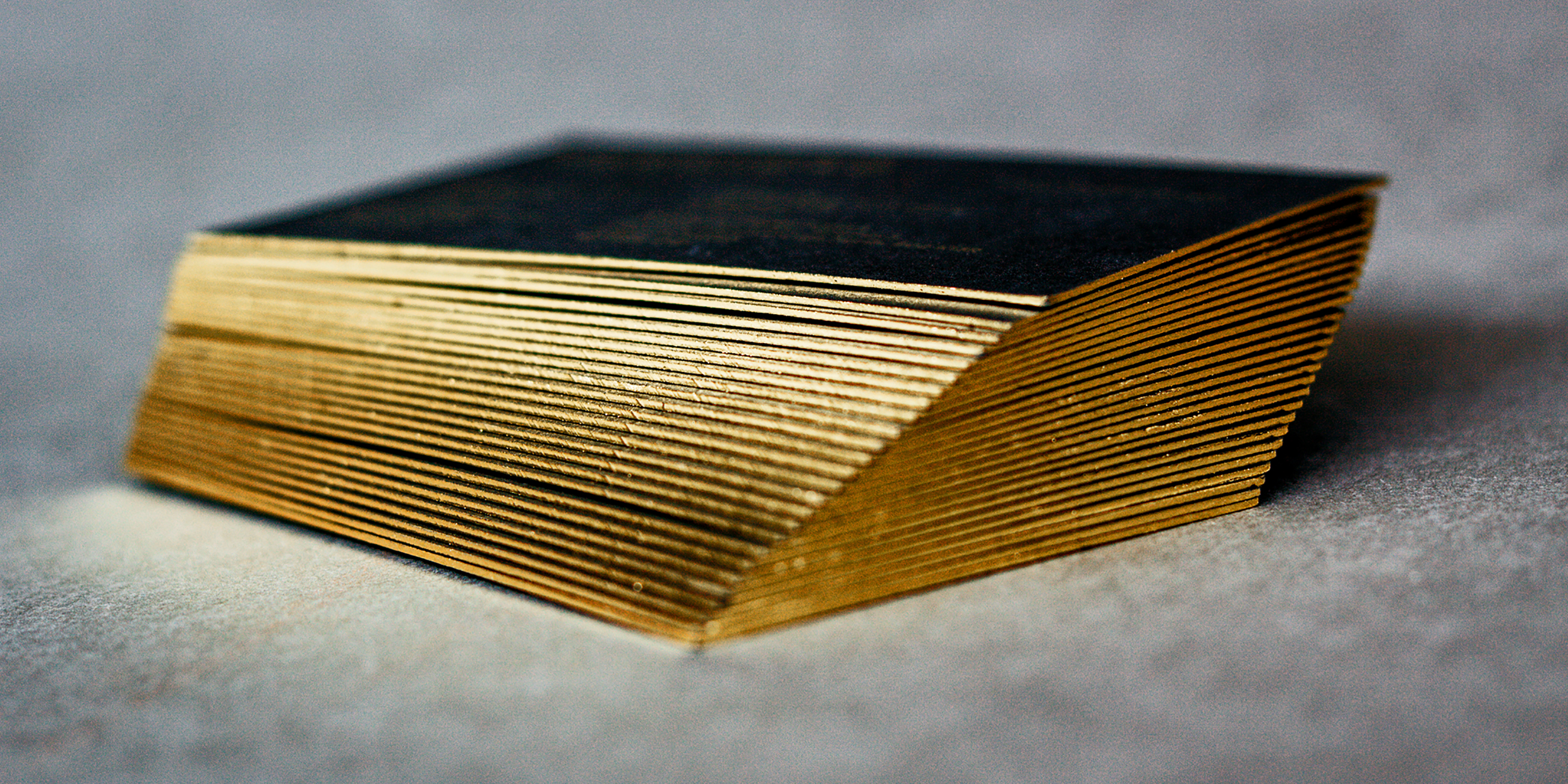
For those using ultra-thick cardstock, gold gilded or painted edges provide a subdued pop of color.
When the cards are stacked, the colored edges create a striking visual block. This is a great way to incorporate a brand’s primary accent color without overwhelming the main design.
Die-Cut Business Cards
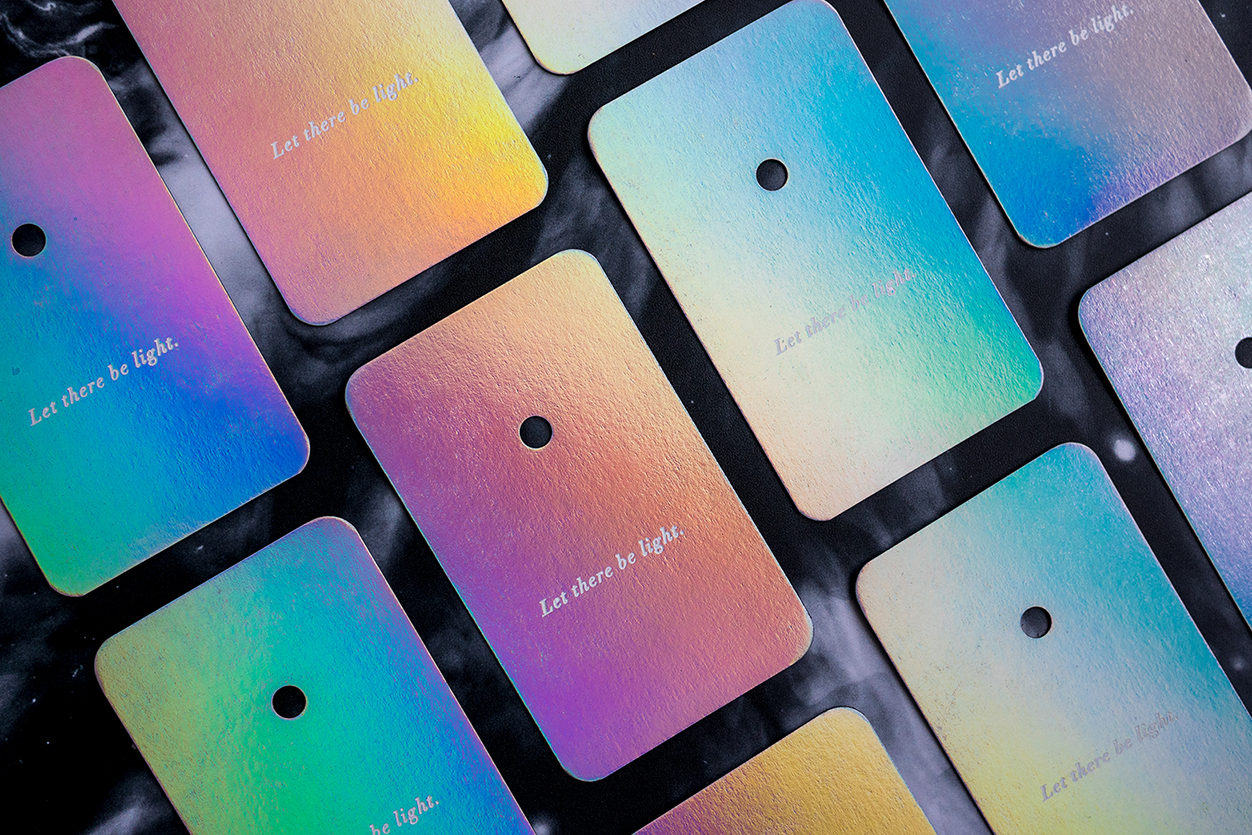
Die-cutting allows you to move beyond the standard rectangle.
Whether it is rounded corners, a circular card, or a custom shape that mimics a product (like a coffee cup or a house), die-cutting ensures your card is physically different from every other card in the room.
How to Convey Your Brand Identity Through the Business Card
The visual design elements on a card must work in harmony to tell your brand's story. Here are the ways that your brand can present itself on your business card.
Colours
Consistency is key; the colors on your business card should perfectly match your logo and website to create a unified brand experience.
Shapes
The shapes on your card can convey different meanings. Rounded shapes feel more modern and approachable, while sharp, traditional corners feel more formal and established.
Note, however, that the shapes and imagery you decide to place on your card should be consistent with that of your brand.
Text Font
The typography should reflect the voice of your brand.
A clean, sans-serif font suggests a modern, tech-forward company, while a classic serif font conveys authority and tradition.
Above all, ensure the font size is legible. A beautiful card is useless if the contact information cannot be read.
Slogan/Tagline
If your brand has a tagline, use it on the business card.
A short, punchy sentence that explains exactly what you do or what you stand for helps the recipient remember your value proposition long after you have parted ways.
Get in Touch with a Custom Business Card Provider Today
If you are ready to transform your professional first impression with high-quality materials and expert finishes, it is time to work with a specialist. Choosing the right combination of material, finish, design, and printing method is a collaborative process that yields a powerful marketing tool for your business.
This tool becomes potent in networking events and coffee meetings.
Get in Touch with Pypr to start crafting a card that truly reflects your brand identity. We elevate standard business card designs with bespoke solutions and premium printing methods.
Frequently Asked Questions
Why do business cards have different standard sizes in the US versus Europe or Japan?
Standard sizes are dictated by regional wallet designs and printing habits; for example, Japanese Meishi (91 x 55 mm) are slightly larger than US cards (89 x 51 mm) to allow for the vertical layout of Kanji characters.
What is the "1:10 rule" for adding QR codes to a business card?
This rule states that the scanning distance should be 10 times the size of the QR code. Since cards are scanned from about 8–10 inches away, the code should be at least 0.8-1 inch (approx. 2cm) for reliable scanning.
Why should I avoid designing my business card in RGB color mode?
RGB is for digital screens that use light. When converted to CMYK (inks) for printing, vibrant digital colors often appear dull or shift significantly, resulting in a mismatched final product.
What is "Rich Black," and when should I use it over standard black ink?
Standard black uses only black ink (100% K), while Rich Black mixes Cyan, Magenta, and Yellow into the black to create a deeper, more saturated tone—ideal for large solid backgrounds.
How do I prevent my business card from having thin white edges after it’s cut?
You must include a bleed area—extending your background design at least 3mm beyond the final trim line—so that slight shifts in the cutting blade don't leave unprinted paper visible.